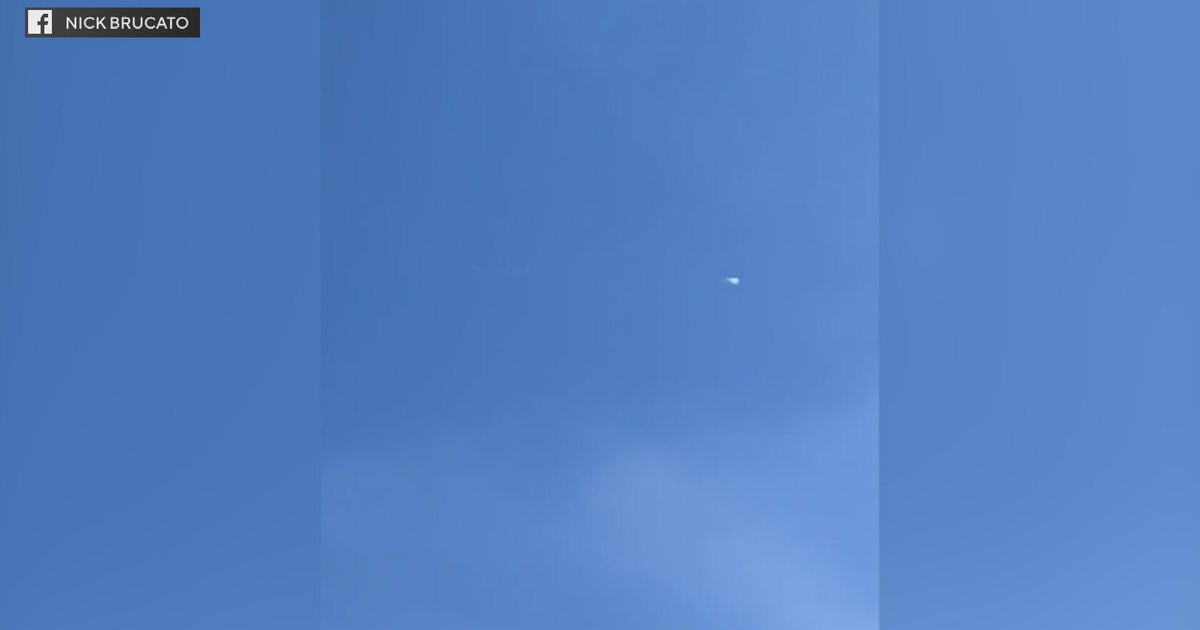
Mysterious Fireball Spotted Across Pennsylvania, New Jersey, Delaware: A Cosmic Spectacle
The night skies over Pennsylvania, New Jersey, and Delaware recently played host to an extraordinary celestial event, captivating thousands and sparking a flurry of reports across social media and news outlets. What appeared to be a brilliant, streaking fireball illuminated the darkness, leaving a lasting impression on all who witnessed its fleeting beauty. This widespread Fireball Sighting Pennsylvania New Jersey, confirmed by scientific observations, has once again reminded us of the dynamic and often breathtaking universe we inhabit.
From bustling city centers to quiet rural towns, residents across the tri-state area looked up in awe as the luminous object cut a path through the atmosphere. The event quickly became a hot topic, prompting questions about its origin, composition, and potential impact. While spectacular, fireballs are a natural phenomenon, offering scientists valuable insights into the composition of our solar system and the constant interplay between Earth and its cosmic neighbors.
What Exactly Was That Bright Flash? Understanding Fireballs and Bolides
The term "fireball" might sound dramatic, but in astronomical terms, it simply refers to an exceptionally bright meteor. A meteor, often called a "shooting star," is the streak of light we see when a small piece of cosmic debris, usually no larger than a grain of sand, enters Earth's atmosphere and burns up due to friction. Most meteors are fleeting, lasting only a fraction of a second.
However, when a larger piece of space rock—ranging from pebble-sized to boulder-sized—enters the atmosphere, it creates a much brighter and longer-lasting flash, earning it the designation of a fireball. If a fireball is particularly bright, appearing even brighter than the planet Venus in the night sky, it's technically classified as a bolide. These impressive events can often be seen across vast distances and may even produce audible phenomena like sonic booms or rumbles, especially if they penetrate deep into the atmosphere.
The recent Fireball Lights Up Skies Over PA, NJ, DE: What NASA Confirmed was indeed a bolide event, captivating observers from Philadelphia to Wilmington and beyond. Its impressive luminosity suggests that the object was likely larger than typical meteors, possibly several inches or even a foot in diameter, before it began to fragment and burn up. Such events are a stark reminder that Earth is constantly bombarded by material from space, though most of it burns up harmlessly high above us.
Eyewitness Accounts Across the Tri-State Area: A Shared Cosmic Experience
The widespread nature of this Fireball Sighting Pennsylvania New Jersey meant that thousands of people had a front-row seat to the celestial show. Reports flooded in from diverse locations, painting a vivid picture of the event:
- Pennsylvania: Residents from the Philadelphia metropolitan area, as well as those further west in Lancaster and Reading, described seeing a brilliant green or blue flash streaking across the sky, often followed by a trailing orange or white glow. Many noted its surprisingly long duration, visible for several seconds.
- New Jersey: From the Jersey Shore to the northern suburbs of New York City, observers in New Jersey reported similar experiences. Some described a flash so intense it momentarily lit up their surroundings, while others in more rural areas spoke of an almost ethereal glow against the dark backdrop.
- Delaware: In Delaware, particularly around Wilmington and Newark, witnesses recounted seeing a fast-moving, intensely bright object. Several people reported hearing a faint "rumble" or "thump" a few minutes after the visual sighting, a characteristic sign of a bolide's atmospheric entry.
What makes these eyewitness accounts so valuable is their consistency. Despite different viewing angles and locations, the general description of a bright, fast-moving, multi-colored object was common. These collective observations are crucial for scientists at organizations like NASA and the American Meteor Society (AMS) to triangulate the object's trajectory and estimate its original path through space. The sheer volume of reports for this specific Fireball Sighting Pennsylvania New Jersey provided an unprecedented dataset for analysis.
The Science Behind the Spectacle: What NASA and Experts Confirmed
In the wake of such a spectacular event, scientific confirmation and analysis are paramount. Organizations like NASA's Meteoroid Environment Office and the American Meteor Society (AMS) are dedicated to tracking and studying these cosmic visitors. For the recent Fireball Sighting Pennsylvania New Jersey, their work was critical in providing accurate information and dispelling misinformation.
Utilizing a network of cameras, radar, and seismic sensors, coupled with the numerous public reports, scientists were able to confirm several key details:
- Trajectory: Preliminary analysis suggests the object traveled generally from west to east, moving over central Pennsylvania before continuing its path across New Jersey and potentially disintegrating over the Atlantic Ocean or coastal waters of Delaware.
- Origin: While definitive identification requires meteorite recovery (which is rare for bolides over densely populated areas or water), the object was likely a small asteroid fragment, possibly from the asteroid belt between Mars and Jupiter.
- Speed and Altitude: Estimates indicate the fireball entered the atmosphere at tens of thousands of miles per hour, beginning its luminous phase at altitudes of around 60-70 miles and likely disintegrating much lower, perhaps around 15-20 miles above the surface.
- Composition Clues: The vibrant green and blue hues reported by many witnesses often suggest the presence of magnesium, nickel, or other metals burning up at high temperatures.
The rapid confirmation and detailed analysis from NASA and other expert groups highlight the importance of public engagement in scientific discovery. Every photo, video, and detailed eyewitness report contributes to a richer understanding of these phenomena. This particular event reinforced the effectiveness of citizen science in tracking space debris, as detailed further in NASA Reports Fireball Sighting Over PA, NJ, DE.
What to Do If You Spot a Fireball or Find a Meteorite
Witnessing a fireball is an unforgettable experience, and your observations can be incredibly valuable to the scientific community. If you are lucky enough to spot another such event, here’s how you can help:
- Report It Immediately: The American Meteor Society (AMS) has an online reporting form where you can submit details of your sighting. Time is of the essence, as memory fades quickly.
- Note Key Details:
- Exact Time and Date: As precise as possible.
- Location: Your exact GPS coordinates if possible, or nearest identifiable landmarks.
- Direction of Travel: Where did it appear from, and where did it disappear? Use compass directions or relative to stars/constellations if you know them.
- Duration: How long was it visible?
- Color and Brightness: Describe the colors you saw and how bright it was relative to the Moon or Venus.
- Fragmentation: Did it break into pieces?
- Sound: Did you hear any sounds (pop, hiss, rumble, boom) and how long after the visual sighting?
- Capture Evidence: If you happen to catch it on dash cam, doorbell camera, or security footage, please share it. Videos and photos are invaluable for scientific analysis.
What if You Find a Potential Meteorite?
While most fireballs burn up completely, larger bolides can sometimes drop meteorites to Earth. If you believe you've found a meteorite in the wake of a Fireball Sighting Pennsylvania New Jersey or anywhere else, follow these guidelines:
- Do Not Touch with Bare Hands: Use gloves or a plastic bag to handle it. This prevents contamination and preserves its scientific integrity.
- Document Its Location: Take photos of the object *in situ* before moving it. Note GPS coordinates, surrounding geology, and any associated features (e.g., impact crater).
- Describe Its Appearance: Meteorites often have a dark, fusion crust, may be denser than typical Earth rocks, and can be magnetic.
- Contact Experts: Reach out to local universities with geology departments, natural history museums, or the American Meteor Society. They can help with identification and ensure proper study. Do not attempt to clean or break it.
A Glimpse into Our Cosmic Neighborhood
The recent Fireball Sighting Pennsylvania New Jersey was more than just a momentary light show; it was a profound reminder of our place in the cosmos. Each such event provides scientists with precious data, helping us understand the composition of asteroids, the dynamics of our solar system, and the processes that shaped Earth. These celestial visitors, whether they burn up harmlessly in the atmosphere or occasionally drop fragments to the ground, are messengers from the vast expanse of space, connecting us to the ancient history of our universe. As we continue to gaze upwards, we can anticipate many more such cosmic encounters, each offering a unique opportunity to learn and wonder.